



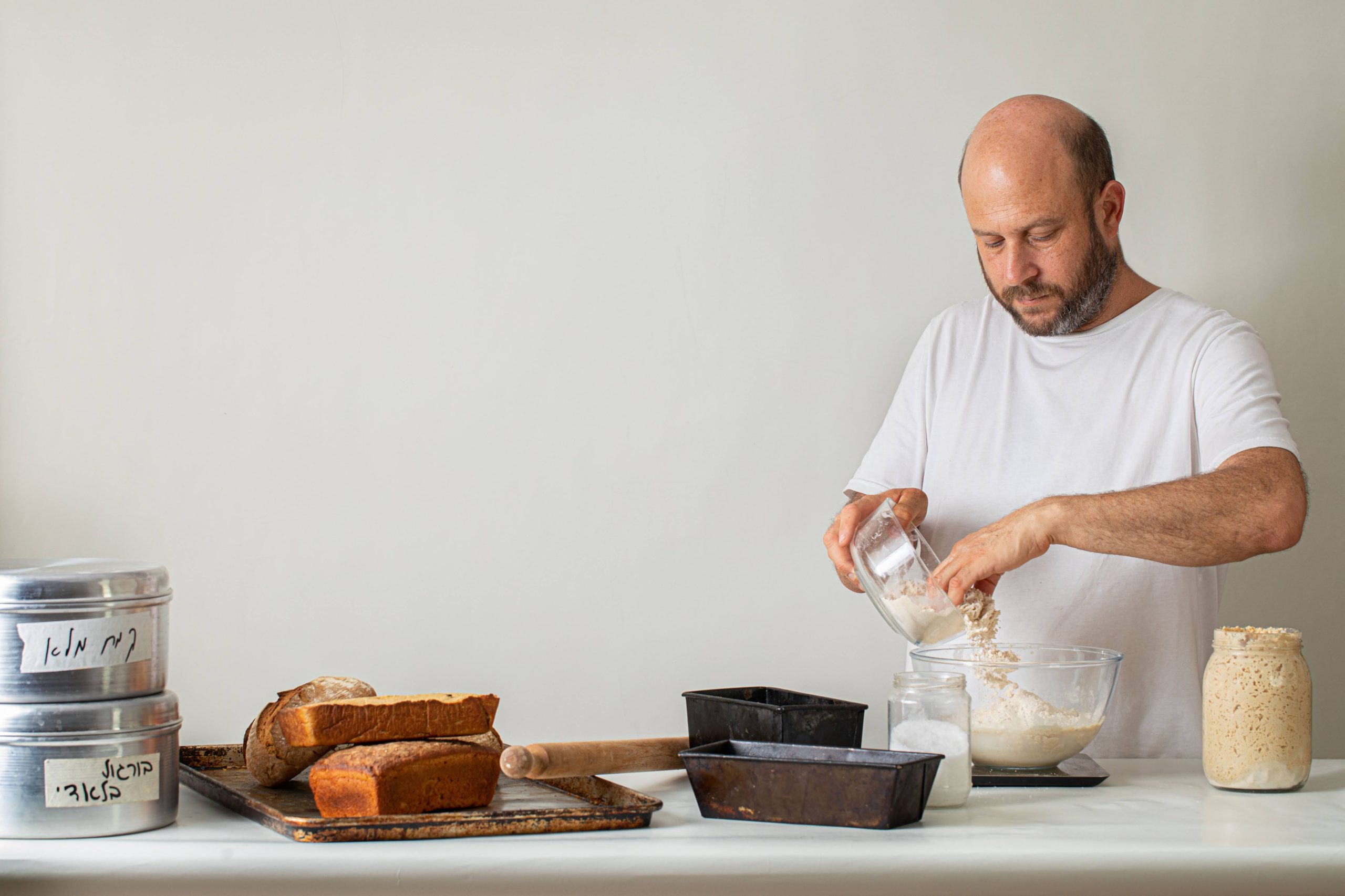
This method produces a stiff sourdough starter, also known as old dough or pâte fermentée. Unlike liquid starters commonly used in modern bakeries, a stiff starter has lower hydration and behaves more like a piece of dough than a batter. It develops more slowly, carries a deeper wheat flavor, and connects directly to older European bread traditions. Before you begin, it is important to say this clearly: making a sourdough starter does not always succeed. Most failures happen because the dough does not capture the right wild yeasts. If it does not work the first time, do not be discouraged. Try again. And if you do not have the energy for this stage, you can always get a piece of starter from someone else and move straight to baking bread.
The starter takes six days to develop. It usually ferments at room temperature, although a slightly warmer environment, around 28°C, is considered optimal.
Click here for the sourdough bread recipe.
Ingredients:
350 g whole wheat flour
425 ml water
Instructions:
Day 1
In a bowl, mix 50 g organic whole wheat flour, preferably stone ground, with 75 ml water until smooth. Cover with a cloth or plastic wrap. During the day, stir the mixture two more times, about one minute each time, using a wooden spoon or your bare hand.
Day 2
Add 100 g flour and 150 ml water to the bowl. Mix well and cover. Stir two more times during the day.
Day 3
On the third day, stir the mixture three times during the day.
Day 4
Add 200 g flour and 200 ml water. Mix well and cover. Stir two more times during the day.
Day 5
Stir the mixture three times during the day.
Day 6
The starter is ready. Since the method we use for bread baking is based on old dough, also known as a stiff starter or pâte fermentée, not a liquid starter as commonly used in bakeries, we recommend baking bread at this stage from the mixture you have created. Instead of refreshing with additional water as in liquid starter methods, remove 40 to 80 g of the mixture for each loaf you plan to bake.