



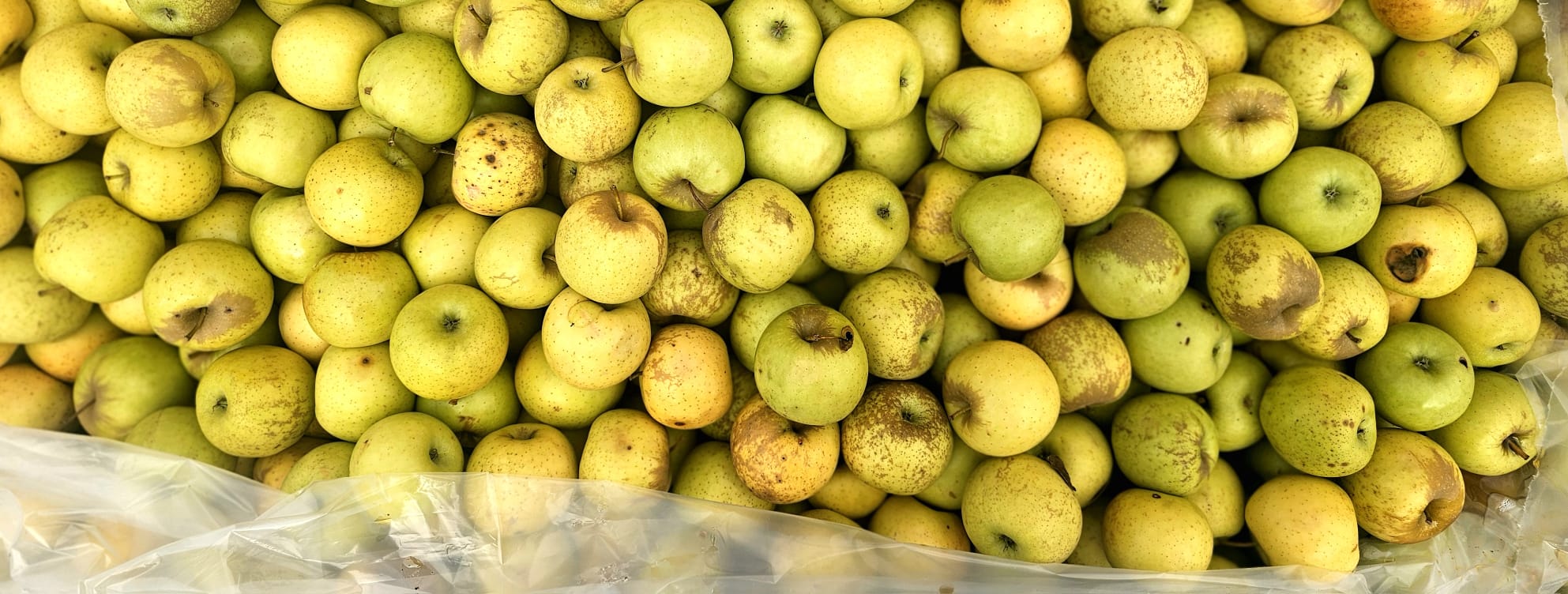
The sugar in apples ferments easily, which makes apple cider vinegar the simplest homemade vinegar to prepare.
This vinegar is excellent for seasoning and salad dressings.
Ingredients:
-
Water
-
Apple scraps (peels, cores, and leftovers)
Instructions:
- Fill a large glass jar halfway with water.
- Each time you eat an apple, add the scraps (peels, cores, etc.) into the jar of water. Cover with a “breathable” lid, such as a cloth secured with a string or rubber band.
- Stir occasionally, at least once a day. Within a few days you will notice fermentation starting in the water. This fermentation will gradually turn the liquid into cider, and then into vinegar.
- After a few weeks, strain the fermenting liquid into another jar and cover that one as well with a breathable lid.
- Continue to stir from time to time and taste as the fermentation becomes more sour. A thin white layer that may appear on the surface is made of beneficial fermentation bacteria. They are there to help, and they are healthy.
- After a few months, transfer the vinegar into a sealed bottle. It will keep well for several years.
Alternative method
You can also make apple cider vinegar directly from apple juice. Juice fresh apples using a hard-fruit juicer or slow juicer. Pour the juice into a wide-mouthed bowl or jar, cover with a breathable cloth, and stir daily until it becomes vinegar. In this method, there is no need to add water or strain the liquid during the process.
The flavor of vinegar made from apple juice will be stronger than that made from apple scraps in water.