



Toast with breakfast, a sandwich packed for school, pita with hummus, pasta for lunch, popcorn at the movies, oatmeal on a cold morning, rice with stir-fry, couscous, bulgur in a salad, a slice of bread beside soup. The list could run for the length of this whole article and still leave enough for a sequel.
Almost every meal today contains grains. In much of modern food culture, that usually means wheat. And beyond the foods where grain is obvious, many prepared and processed products contain grain in one form or another. More than potatoes or tomatoes, more than meat or legumes, grains are present in almost every bite we take.
So how did they come to dominate our diet, and why?
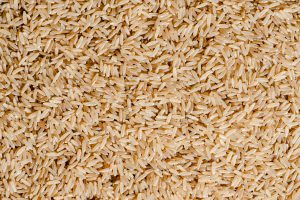
A Little Botany
Grains belong to the grass family, a vast botanical family with thousands of species. It includes the cultivated grains we know and eat, as well as wild plants such as common reed and couch grass, a stubborn weed familiar to many farmers. Botanically, grasses usually have narrow leaves and hollow stems.
In earlier periods, people did not define grains by botanical family. They grouped them more broadly as seeds or kernels, together with many legumes such as lentils, beans, and peas. Something similar still happens today. We often call certain seeds “grains” because they fill a grain-like role in the kitchen, even though botanists classify them differently.
Quinoa, originally from the Andes, is one example. Buckwheat, which originated in Asia, is another. These are often called pseudocereals: seeds that are cooked and eaten like grains but do not belong to the grass family. Wild rice is a little different. It is not the same species as cultivated rice, but it is still a grass. Black rice, meanwhile, is usually a dark variety of cultivated rice.
The familiar foods that truly belong to the grass family include wheat, barley, rye, rice, oats, corn, millet, sorghum, and teff.
How Grains Entered Human Life
To understand how grains became so central, we need to go back to the beginning of agriculture.
Even hunter-gatherers gathered wild grain heads, but they ate them as they ate other seasonal plants: fresh, ripe, and in the quantities they could collect from the wild.
With the transition to farming, grains turned out to be among the easiest crops to manage. Once people learned to cultivate them, produce large amounts of food from them, and dry and store them with relative ease, grains changed status completely. Their convenience for farmers moved them to the center of human nutrition.
In nearly every region, at least one grain became a staple: wheat and barley in the Near East, rye and barley in Europe, rice and millet in East Asia, corn in the Americas, and teff in Ethiopia.
Grains produce large yields, grow quickly, and provide an important source of energy through carbohydrates, along with other nutrients. Their main limitation, especially when feeding large populations, is that they are relatively low in protein. But wherever a grain was domesticated, a legume was often domesticated alongside it. Legumes are rich in protein and complemented the grains. In this part of the Levant, wheat and barley were domesticated alongside legumes such as peas, chickpeas, and lentils.
Agricultural settlement created a new need: preserving food for later. Grain kernels are especially well suited to drying and storage, so people began eating more grain in its dry form, such as wheat ground into flour. This made grains more central than they had ever been before the agricultural revolution.
Many researchers suggest that the rise of grains changed human health in several ways. First, grains reduced the diversity of the diet. Wild foods gathered fresh and eaten in season tend to offer a wider nutritional range than crops harvested, dried, stored, and eaten long after their season.
Some researchers also point to the physical demands of grain agriculture. Growing larger quantities of grain and working larger areas of land required repetitive labor on a scale humans had not known before. The wear visible in the backs, knees, and bones of some early agricultural populations may reflect this shift.

Why Wheat?
Every region had its central grain. But today wheat is the dominant grain across much of the Western world, and one of the most important grains globally. Why did wheat, specifically, rise so far?
There are two main reasons: bread, and geography.
Among the major grains, wheat is especially well suited to making raised bread because of its gluten. Gluten gives dough elasticity and helps it rise. Wheat bread therefore became lighter and easier to eat than breads made from many other grains, such as rye.
Wheat also originated in the Fertile Crescent, where it was domesticated and where wheat bread became part of the food culture of ancient Mediterranean and Near Eastern societies. From there, wheat bread spread through trade, empire, migration, and changing food systems.
The Fertile Crescent also had unusually favorable conditions for grain domestication. The wild ancestors of several early crops grew there, including einkorn wheat, emmer wheat, barley, lentils, peas, chickpeas, and flax. These plants were productive even in the wild and relatively easy to bring into cultivation. The region’s environmental variety also meant that it contained many useful wild species.
As European and later industrial food systems expanded, wheat became increasingly dominant far beyond its original home.
The grain revolution in general, and the wheat revolution in particular, affected the human diet not only because grains became central, but because the grains themselves changed over time.
Celiac Disease, Gluten, and Wheat Sensitivity
Gluten is one of the things that made wheat so useful for bread. But the same quality that improves bread can make wheat difficult for some people to digest.
Over generations of selection, and later through modern agricultural and food technologies, wheat was shaped for stronger and more reliable baking performance. This is not only a question of “more gluten.” It also has to do with gluten quality, dough behavior, milling, baking methods, and the way wheat appears throughout the modern diet.
Celiac disease, an autoimmune condition triggered by gluten, is diagnosed more often today than in the past. That is partly because of better awareness and testing. At the same time, wheat and gluten are much more present in modern diets than they once were.
There is also growing discussion of non-celiac wheat or gluten sensitivity. Some people who do not have celiac disease still report digestive discomfort, fatigue, headaches, or other symptoms after eating wheat-based foods. This field is still being studied. In some cases the trigger may be gluten; in others it may be other wheat proteins or fermentable carbohydrates in wheat, especially fructans, which can cause bloating and digestive discomfort in people who are sensitive to them.
This does not mean everyone should stop eating gluten. It does mean that quantity and variety matter. Eating different grains, rather than relying almost entirely on wheat, is one way to reduce the burden. When eating wheat, whole and less processed forms are usually a better choice.
If someone has persistent digestive symptoms, reducing wheat or gluten for a period may help clarify what affects the body. But anyone who suspects celiac disease should seek medical guidance before removing gluten completely, because testing is most accurate while gluten is still being eaten.
It is also worth remembering that the wheats historically grown in this region were not the same as the high-rising bread wheats widely used today. Traditional local wheats, including durum-type wheats, often made denser breads that rose less dramatically. Their baking behavior was different, even when the wheat itself was hard.

The Problem with White Flour
Another major change in the grains we eat came with modern milling. In the nineteenth century, new milling technologies made it much easier to remove the outer layers of the wheat kernel and separate out the pale inner part. What remained was mostly starch.
This was a major advantage for trade. White flour lasts longer, stores more easily, and is more profitable. But nutritionally, it comes at a cost.
Whole wheat contains fiber, minerals, vitamins, and oils in the bran and germ. When wheat is refined into white flour, many of these parts are removed. What remains is mostly starch, a carbohydrate that breaks down quickly during digestion and supplies the body with readily available energy.
In this sense, refined white flour can behave more like a fast-digesting carbohydrate than many people realize. A large part of the modern diet’s excess carbohydrate load comes not only from sweets, but also from refined flour.
This is true of wheat, but the same basic issue appears in other refined grains too: white rice, pearl barley, and other grains that have had their outer layers removed.
Over the last century and a half, the technology that turns whole grains into white grains became the norm. White bread, white pasta, sushi made with white rice, and rice dishes made with polished rice now feel standard. Yet historically, many of these foods would have been made from whole grains.
A Health Summary, and a Little Anthroposophy
The shift that moved grains from the margins to the center of the diet eventually changed the grains themselves. Now the pendulum is beginning to swing back. Markets offer a wider variety of grains than they once did, including whole grains. This gives us the chance to diversify what we eat and to move away from the most depleted grain products, especially refined white flour.
One creative reminder comes from the anthroposophic tradition, which assigns a different grain to each day of the week. In this tradition, Sunday is for wheat, Monday for rice, Tuesday for barley, Wednesday for millet, Thursday for rye, Friday for oats, and Saturday for corn.
There is no need to follow this literally. Many people have their own food rhythms and traditions. But the idea itself is useful: our bodies benefit when we do not eat the same grain, in the same form, every day.

A Few Practical Guidelines
When buying and cooking grains, a few simple habits can make a real difference.
Brown buckwheat sold in supermarkets is usually roasted. Roasting extends shelf life, but roasted buckwheat will no longer sprout. Raw buckwheat is pale greenish-white, and it is the better choice when freshness and vitality matter.
Whole grains are often worth soaking for several hours before cooking. Soaking begins a process similar to germination and can make grains easier to cook and digest.
If you ever pass a grain field during the ripening season, taste a fresh kernel. Notice how different it is from dried grain, and how much work it takes to free it from its husk.
The oats commonly used for porridge are rolled and flattened so they cook quickly. Whole oat groats are also available. They look similar to wheat berries and can be used for porridge and other dishes.
To understand how central grains are in modern life, try avoiding them for one week. Notice what changes: in your meals, your habits, and the way your body feels.
Because whole-grain flour has a shorter shelf life than white flour, check the date when you buy it and choose the freshest option available.
Not all whole wheat flour is simply whole wheat ground as one intact grain. Some is reconstructed: the parts of the kernel are separated, milled separately, and mixed back together. Stone-ground whole flour is usually less processed and more likely to come from the whole kernel milled together.
For bread baking, rye flour is worth getting to know. It is more nutrient-dense than refined wheat flour and lower in gluten, though this also means it does not rise as dramatically. If the shift from wheat to rye feels too abrupt, spelt can be a useful middle ground: it contains less gluten than many modern bread wheats, but more than rye.